Wednesday, February 2, 2022

Chinese New Year Zodiac Myth


The Chinese Zodiac assigns one of the signs to each year, and there are a total of 12 signs (all animals).  There is a story behind the order in which the animals are assigned, and of course there are many variations on this story.  This is my favorite.

A very long time ago, Buddha decided to hold a race and he invited all the animals of the kingdom.  Even though all the animals were invited, only twelve showed up for the race, and so Buddha rewarded those twelve by naming a year after each of them, and the order in which they finished the race was the order in which the calendar years were arranged.


Rat was very excited about the race, but saw that there was a large river that crossed the race path.  Knowing he wasn't a very strong swimmer, Rat made a deal with Ox, persuading him to let Rat ride on his head across the river.  Once they were across the river, Rat dashed ahead of Ox and was the first across the finish line.


Tiger is both fast and a strong swimmer, and so he finished third, just after Ox.  Surprisingly, Rabbit was next to cross the finish line.  He had been jumping across the river from stone to stone, but slipped and fell in.  He managed to scramble onto a log and made it to shore, tired and wet, but finishing in fourth place.


Dragon should have been a shoe in for first, as he is able to fly, however he came in fifth.  Dragon had stopped on his way to the finish line to save a village from a flood, and then he had seen Rabbit drowning in the river and had blown up a wind to help guide him to shore.


Horse would have been next, however Snake had wrapped himself around one of Horse's legs and when Horse made it out of the river, Snake slithered forward, startling Horse who reared back.  Snake slipped into sixth position, with Horse following right behind him.


Goat, Monkey and Rooster decided to work together to build a raft to cross the river.  When they got to the other side, Monkey and Rooster insisted that Goat go first, as he had kept them calm when they were panicking on the river.  So Goat crossed first of the three of them, followed by Monkey and then Rooster.


Dog had been a favorite to finish early, but he was too playful, and spent a lot of time splashing and playing in the river, allowing other animals to pass him by.


Buddha thought Dog would be the last, but then Pig surprised him by showing up.  Pig had gotten so hungry during the race, he stopped to eat, but he ate too much and grew sleepy and had to take a nap.  When he woke up, he became the last to cross the finish line.


The twist to the story is that Cat isn't part of the zodiac at all.  Cat liked to sleep in late and knew he risked missing the race, and so he asked Rat to wake him up.  Rat, however, was too excited to remember his promise to Cat and forgot!  And so Cat overslept and missed the race and has no place in the Zodiac.  He never forgave Rat and that is why they are foes.


2022 is the year of the Tiger, more specifically the year of the Water Tiger.  Tiger years are associated with courage and spontaneity and can be a bit of a roller coaster (not really something I think many of us want to hear...), but fear not because the fact that it is a water year helps tame some of that fiery Tiger energy.  This year will temper that unpredictability and lends a sense of quite self-control.


Tiger years are often considered quite lucky, but as with many forms of luck it can be fickle and luck can change quickly.  So always remember to use a cautious approach and not let any lucky streaks drive you to recklessness.


Overall, the Year of the Tiger will be exciting and highly charged, so be ready for a wild ride and make sure to dedicate time to self-care and calm, so that you are ready for whatever this year might throw your way!

Wednesday, January 26, 2022

Magical wishing


 We often say that wish magic is the first magic we do as children, whether it's blowing out the candles on our birthday cake, wishing on a star or blowing a dandelion puff.  And yet, as adults, even witchy adults, we are often told that wishing is less desirable.  


From a magical perspective, wishing is often seen as fanciful and 'not doing the work'.  Wishing is often very spur of the moment, you are taking advantage of some fleeting situation (like finding a loose eyelash), and making a spontaneous wish.  It's not a deeply thought out desire (like what we might use for the focus of our other magical workings), it's often not highly defined (again in comparison to other magical workings), and it rarely involves any actual work (other than some kind of activation, often involving blowing).


And yet, wishing is in some ways more magical than some of our other works, exactly for those same reasons.  We are really calling up our inner child, and their pure and simple belief in the power of wishing, and we are giving them the reigns.  Often the things we wish for, when we aren't given time to think about it, are very basic desires that are dear to our heart.  They may be things that are simple and materialistic (maybe we wish for a piece of pie or a pretty new stone), or they may be more idealistic and dreaming (we might wish for happiness or peace).  They might even be things that we are told not to work on magically (like wishing for a romantic partner or money).


Wishes are somewhat similar to dreams, but wishes are even more ephemeral.  Wishes are often things we don't want to admit we are wishing for.  They may seem trivial or too big, they may seem selfish or controlling, they may be silly or unrealistic.  The power of wishes is that when we wish for something, we not only admit that we want a thing, but there is also an unspoken understanding that it might not happen...or it may happen slightly different than we envisioned.


I feel very strongly that all magic works on our intent, and sometimes when we sit down and plan things out, we get bogged down in the details.  When we wish, we are stripping away most of the mechanics and just keeping the desire.  What is it that we wish for?  


I actually think wishes shine when we use them for huge or tiny things.  I don't find myself wishing for reasonable stuff very often...when I want reasonable things I do other workings towards them.  Wishing is something that I think of as 'magic for stuff I wouldn't do magic for.'


Wishing is great for all those 'impossible' things that we dream about in our perfect world.  Wishing for world peace or global awareness, or for people to let other people just be happy.  Wish for those crazy over the top things that make you giggle just a bit for even thinking about it:  a home on a private island, a zillion dollars, to be young forever.


Wishing is also wonderful for trivial things.  I wish that package I ordered will come in today.  I wish there will be snow.  I wish my husband would suggest tacos for dinner.  Just fun little random things that honestly wouldn't bother me if they didn't happen...but would delight me if they did.


I put wishing a bit in the superstition category.  I don't always wish because I think my wishes will come true, but I definitely wish because it makes my heart happy to wish.  I think the simple act of making a wish is delightful and it brightens my day.  It's one of those things (kind of like meditation actually), where the act of doing it is the whole purpose for doing it (to me).  


I really do think that wishing is important though as it's a way to build up our sense of wonder and encourage magic into our lives.  Every time we make a wish, we are inviting magical happenstance to bless us with our wish.  We are affirming that we believe things can happen just because we wished for them.  We are accepting that wishes aren't actions, they don't lead to a particular result all the time, they aren't certain...but they open the door and invite magic in.


If you struggle with wishing, I encourage you to pick one method of wishing that seems the most fun, and challenge yourself to practice it whenever it appears in your life.  Maybe you want to start small and just make a wish once a year on your birthday.  Or maybe you decide to toss a coin into any wishing wells you find.  You can even make up your own lucky trigger for wishing.  Perhaps you will make a wish whenever you see a lady bug.


Most of all, have fun with it.  Wishing is all about joy and wonder, so tap into your inner child and let go of all expectations.  Give yourself permission to wish for anything and everything.  Whatever pops into your mind when your wish trigger happens, embrace it!  Let yourself wish for purple house slippers or a double rainbow.  Let wishing be a way to allow your inner child to play!

Wednesday, January 19, 2022

Deep Clean


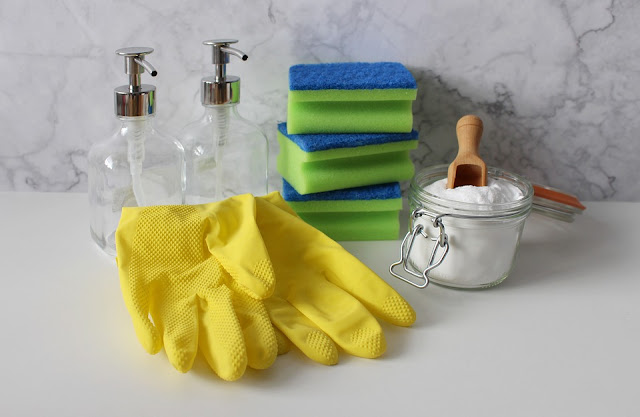
Cleaning is one of those mundane tasks that very few people look forward to.  And I make a distinction between cleaning (physically removing dirt and grime) and cleansing (energetically removing gunk), so today we are really going to talk about cleaning (though of course doing a good cleanse while you clean is always an option).


When it comes to really doing that deep clean, we often associate cleaning with spring (pretty much everyone's heard of spring cleaning).  I think that in spring, when the weather gets nice, we are called to do more stuff outside, and historically opening up the house would help with the cleaning.  Windows could stay open in the day (letting wind help carry dust away), and some tasks were just easier to do outside (banging the built up dirt out of rugs, letting laundry dry on lines).  


But, as we live in a climate controlled world today, we don't have to wait until spring to get our clean on.  In fact, for many of us, it might feel more aligned to do our deep cleaning in the winter, when we are stuck inside.  Not only are we often spending more time in our house (and thus it's getting dirty more), but keeping our space clean can help it feel nicer (whether you like being 'stuck' at home or not).


Deep cleaning is also one of those things that we tend to think of doing all at once.  Like it's a reasonable thing to just clean your entire house from top to bottom in a week (or a few days *shudder).  I've participated in a cleaning challenge that worked through the whole house over the course of a month and I was exhausted after a few weeks.


But I also know that I always feel better when things are clean.  And regular cleaning doesn't always do a good job (or clean everything).  There are lots of bits of our house that just aren't touched by the weekly cleanings, and over time they get pretty scary.


Learning how to do small, deep cleaning is a great skill, as it lets you tackle some of these tasks without being exhausting, overwhelming or encouraging you to give up.  I also feel that, being Pagan and often viewing the world in an animistic way, gives me greater motivation to keep my home space clean.  It can be an act of devotion to my house spirit or any number of domestic deities I might work with.


Being of a witchy inclination can also make cleaning into something more.  Not only can it be an act of devotion (and doing service for someone else makes some tasks easier), but we can mix in things like cleansing sprays or herbs that just make the tasks more pleasant (because herbal workings often smell amazing!)  We can use cleaning chants to help make tedious tasks more enjoyable, or view the cleaning as a form of active meditation.


One thing I've found that helps immensely is to find tools and methods that work for you, and sometimes this starts by identifying what doesn't work.  I still haven't found the best way to deal with dusting, but I know that neither those fancy dusters (or the lovely old feather dusters) work well, and using a rag takes forever (seriously I won't rag dust my desk more than once a month because it takes an hour just to do my desk!)


This includes if you just can't stand certain sensations/smells/whatever.  I know a lot of people who have to wear gloves for many cleaning tasks, while I'm the exact opposite, I hate wearing gloves and would rather touch all the things and just scrub up afterward.  One of my personal things I've found is that baby wipes work so well as cleaning cloths (especially for scrubbing deep dirt).


The biggest trick I've found is to give myself one task for a day, and to really not let myself keep adding more on.  So if my goal is to clean the bathroom floor, I will focus on that and not worry about the doors or the tub (because if I get distracted, then I have like three different things half done or I've spent 5 hours cleaning and just want to collapse).


I also try to sneak in one small extra thing when I do regular cleaning (if I have the energy for it...if it's one of those weeks where I'm barely managing the basic clean then I just focus on doing what I can).  This might be as simple as picking one extra surface in the house and giving it a wipe down, or cleaning the front window (our cats love to press their faces on it, so there are kitty nose and paw prints all over it!).  But it's one thing that I wouldn't do normally that is now clean.


The great thing about doing little deep cleans like this is that, over time, you will end up with more of your house clean.  If you get really good at it, then it is like doing a full clean just over time (and if you cycle it right, you just keep cleaning a different thing and the house stays clean).


We all live somewhere, and keeping our space clean has so many benefits.  It improves our health, it improves our mood, and we can function more efficiently in a clean space.  Using cleaning as a form of devotion adds in a spiritual layer, and can help us create a better relationship with beings who watch over our home.  All in all, it's a worthy practice to work on.

Wednesday, January 12, 2022

Routine reset


 I sort of think of the whole end of the year as 'Holiday Season,' and it typically covers from Samhain through the New Year.  It feels like this whole chunk of time everything is slightly off-kilter, and the routines we are used to are thrown out the window and we have to just figure out how to make everything work.


Holidays are stressful enough, but for those of us who rely upon our routines to help us stay focused and feel balanced, they can be extra crazy making.  Normally, by the time New Year rolls around, I'm well and ready to get back to my normal.  Sometimes I need a bit of extra 'off' time, where I do the barest minimum and just allow myself to have extra space and no expectations.


But eventually I need to get back into it.  And while many people dive right into the new year with big goals and new directions, I often like to get my regular routines back in place first, before starting off on a new venture.


Routine reset can mean different things, depending on what kinds of routines you keep.  I use my planner to help me organize and stick to my routines, and I swap up planners each year, so a new year has some level of new routine for me.  I'm figuring out how to track and plan all the things I need to do alongside the things I want to do, and I'm learning how the new planner format can suit me.


I actually thing this helps me reset my routines, as it's not so much a true going back to what I did before, it's more of a figuring out how to tune my routines to a new structure.  Which really forces me to consider what is most important.  This year especially, I have a completely different core structure in my planner, so less focus on each day and more focus on the week as a whole.  I am hoping this will give me a bit more flexibility while still keeping me on track.


Even if you are adding in new goals straight off the bat, taking some time to ease into them helps you refine your goals to a manageable level.  The impulse is often to dive right in, to take big leaps and jumps while we are inspired and excited, and to push ahead as hard as we can.  And if that works for you, great!  But I find that more often leads to burnout.  I end up being more excited than I have energy to follow through on, and I can't keep up with all these new tasks and goals I've piled on.


Instead, if I start with the idea of resetting my routine, I look for the absolute bare minimum, the core practice or task that will build the foundation for future growth.  I do this for every part of my life.  This 'basic necessities' routine is what I fall back onto when life gets rough.  When I get curve balls or things come up and I can't do all the things I want to do, I return to the basics and I know that I can feel good about maintaining my life without over stressing myself.


So what does this actually mean?  It means being really honest about what things are deeply important to you, and what stuff falls into the 'if I have time/energy' category.  And you might find that some things surprise you.  


When it comes to housework, I absolutely need to vacuum/sweep once a week.  I aim for twice a week, plus dusting and when I'm really ambitious I'll pick one area to deep clean.  But if I don't get that one basic clean in, I just feel horrible.  It effects my energy, and just makes me feel like I'm not doing what I need to do.  So I know my baseline, and I also know what my goal tasks are.


I use this same idea in other areas of my life.  My baseline physical practice is morning stretching.  I have added daily exercise, but on days where I feel particularly low energy I can skip that and just stick to the stretching.  My baseline spiritual practice is daily intention and moon cycle work.  My baseline divination is weekly intention and monthly spreads.  My baseline writing is weekly blog and Patreon posts.  


Making sure I reset my routine at the start of the year gets my feet firmly back on the ground.  It lets me put the foundations in place for all the parts of my life that let me build those areas up more.  If I don't reset my routine, I feel like I'm trying to balance a bunch of new stuff while standing on a tower of sand...like my feet could come out from under me at any moment.


So if you are feeling a bit off balance after all the holiday insanity, try doing a routine reset.  Hone your routines back to their bare minimums, think about what you want to do every day/week/month, and what stuff is more extra stuff you can add in if you have the time/energy.  Start small, and allow yourself a bit of a break before you start building back up.

Wednesday, January 5, 2022

New year doesn't have to bring newness


A lot of people link the New Year with big change.  It's seen by many as some mystical time of setting new goals and dreaming bit.  As a liminal time, there is power in the changing of the year, and it's a natural time to leave behind things we want to be rid of and to envision a better and brighter life for ourselves.


But sometimes, the idea of big change is just too much.  Some years we may not want to do anything big, or even really anything new.  For many people, the last couple of years have been too much, and though I think we all wish for things to be better, the prospect of working that change in our personal lives can feel daunting.  For other people, they have created big changes in their personal lives, and may need a year to regain their footing, a year of rest to really settle into the changes they have already made.


Just because we are starting a new year doesn't mean we have to seek out newness in our life.  Just because we are leaving behind an old year doesn't mean we have to set ourselves up with tasks to either get rid of or bring in different things.  Sometimes, it's okay to just want to stick with our regular patterns.


The thing about life is that it sometimes brings us change whether we want it or not.  I think part of the reason why we look to change at the New Year is because it is a natural time of transition.  I am a huge fan of reflection, of checking in at certain times (and yes the New Year is one of those), because I'm naturally forgetful, and I know that if I don't link reflection to specific times, I will forget to examine my life.  And if I'm not looking at where I am, then nothing will ever change.


But I also understand being overwhelmed by change.  When we are bombarded by changes, especially changes that are big and scary (and completely out of our control), we feel helpless and tiny.  We feel adrift on a turbulent sea, clinging to anything that feels safe and familiar and just wanting to close our eyes, block everything out and reassure ourselves that we have any sort of agency.


It is at these times we might feel a need to sink into our established rhythms instead of trying to change our course.  When we feel out of control, we turn to the familiar as a way to ground and center.  And whether or not the change was big and external or more personal, sometimes we need to focus on stability instead of looking for something new.


Traditions can be very soothing, and if you have built New Year traditions into your personal practice and life, it may feel scary to try to change that, but the nice thing is that you may not have to.  It may just take a bit of twisty thinking, turning your perspective on it's side and considering the New Year from a different angle.


For quite a few years now, I've picked a theme for my years.  Normally this theme comes with the idea of 'big work'.  Whatever my theme is, I'll think about how that can be applied to my life and what I can do to manifest my theme both in my daily life and over the course of the year.  In previous years, I've picked themes of magic (working all the Sabbats as well as increasing my daily practice), moons (working every phase of every moon), and reboot (which was meant to look at both my daily activities and my larger practice and give it a complete overhaul from the ground up...but ended up being about rebooting my health...it's funny how life works out).


I can still work with this idea of having a theme for the year and also incorporate in embracing stability and not seeking out change.  I just need to broaden my thinking to include more restful themes.  I might pick a theme like self-care (and work on being open to my personal needs and allowing myself space to just be with whatever feelings and experiences I'm going through), or maybe I could pick stability (working on really sinking into my daily rhythms and the other structures that make me feel safe and keep my life running smoothly).


Instead of setting forward thinking goals, I could turn them inward, and work on acceptance or empathy or observance.  The key is to find something that doesn't push you.  It may feel counterintuitive, especially if you are normally very goal oriented or if you are someone who finds big dreams helps them get the daily stuff done (I am very much one of those people...if I don't have some kind of bigger picture, then I feel like nothing gets done).  


And sometimes it means just sitting with the idea of having a rest year.  We might have to remind ourselves that 'not doing stuff' can actually be productive.  That if we are constantly going and doing and looking ahead, we never have time to reset and dream.  And both of those are necessary for a balanced and healthy life!


Rest time lets us recover our balance.  When we are constantly on the go, we never get a proper reset, and that means we don't fully integrate what we have learned along the way.  Think of it like trying to only survive on naps, instead of getting a proper night's sleep.  Even if you spend the same amount of time 'sleeping', taking 8 one hour naps isn't nearly as restful as sleeping for 8 hours straight.  


Dreaming is a creative output.  Dreaming includes time to wonder, to let thoughts drift around in your head just to see where they will go.  It's a form of rest, and it's often where our big ideas come from.  If you are wanting to focus on resting and dreaming, you can gather up your ideas and thoughts and keep them for later, for when you are ready to get back in there.  If you never stop to dream, you might suffer from burnout, from a lack of ideas for new projects.  


As we begin this new year, ask yourself if you need a new goal or if you need to step back from newness.  Both are perfect answers, at different times, the key is knowing which is best for you right now.  

Wednesday, December 29, 2021

Reflections for growth


 One of the assignments I disliked most when I was in school was reflections.  I think all my English teachers had us do reflections.  We would turn in a piece, and we would also have to turn in a reflection on our piece, and we would be graded on both.  Looking back, I'd have to thank my teachers, and apologize for the lackluster way in which I approached those reflections.


Reflection is a huge part of my life.  I'm a planner, planning helps me keep my life on track.  And for me, reflections are integral to my planning.  I give myself more space for each day, not because I need more space for tasks, but because I want to be able to reflect on each day.  Looking back at the day and writing about what went well (and what didn't) helps me stop and think about what is working (and what isn't).  Doing it daily means it's easy to directly connect my mood to the things that went on.


I also do monthly and yearly reflections.  Monthly reflections allow me those small 'bigger picture' moments.  I have a lot of tasks that I do on a monthly basis, so taking a moment to stop at the end of the month and evaluate the month helps me make sure that I'm staying on track and that the things I am doing are working for me.  If I need to make adjustments, a month is a great yardstick for whether the adjustments are beneficial or if I need to keep adjusting.


I'm in the midst of my end of year reflections right now.  I feel these are the big ones.  Since I do themed years, this is my time to look back and see how well I worked on that theme for the year.  My yearly reflections aren't judgemental, I don't think of it as succeeding or failing (even on years where I end up not being anywhere near where I thought I'd be at the end of the year), but more as a way to check in and see what the triumphs and struggles were.  Any struggles are examined as teaching moments...what can I learn from what went poorly and how can I support areas that I feel I am not well supported in.


And I think that's something really important to keep in mind when doing reflections.  It's not about beating yourself up...no matter how spectacularly you 'failed' at accomplishing your goals.  It's all about how to move forward.  It's all about growth and self-care and being honest with yourself.


When looking at places you don't feel great about, really be brave and explore why you feel the way you do.  Poke at what caused the issues.  It can feel overwhelming and it is easy to fall into a self-depreciation trap and only see the places we messed up...while ignoring all other factors.  But there is a lot to consider, and when you root out all the details you have a better idea of how to do things differently the next time.


Sometimes, we pick our goals poorly.  Maybe we thought we knew what we wanted, but as we explored it more it didn't really fit us well...but it was a goal so we stubbornly plodded along (but secretly resisted it and didn't ever have good motivation to work on it).  


Sometimes things completely out of our control derail our goals.  Maybe we got sick or injured, maybe our job situation changed, maybe our personal situation changed...and all of a sudden the resources we thought we'd have just aren't there.  These changes can be really hard to accept, but it's worse to continue to beat ourselves up for things that are out of our hands.


A common issue is that we bite off more than we can chew.  Especially if you are like me, and have a ton of things you are excited about, it's easy to set a bunch of goals for different areas of your life...and then realize you absolutely don't have time to do all of them justice.  When you're in the midst of it, it can be hard to see that if you picked a few less goals you would have been okay.  Especially when the individual things you were doing for each of your goals were simple, it can leave you feeling like you can't do anything.  This is one of those places where perspective really comes into play (it's also helpful sometimes to actually plot out all the stuff you need to do for all your goals in one place....tackling one goal that requires ten minutes a day is very different from trying to manage ten goals that take ten minutes a day)


It could also be that the method we chose to reach our goals wasn't a good fit to us.  We may feel very strongly about the goal, but we struggled to follow our plan.  Reflecting on the things that didn't stick can help us figure out why they didn't work, and we can come up with a new plan to try.


I also feel it's very important to recognize the things you did well, and not to just focus on what didn't go well.  It's really easy to get caught up in trying to 'fix' the things that you feel you failed at, but taking the time to reflect on the things that were good gives us that other perspective.  It shows us what works for us, and that gives us more tools to use for the things we want to work on.  Knowing your strengths is just as important as knowing your weaknesses!


This also includes recognizing those unexpected successes.  We often have things that we did that turned out surprisingly well.  Perhaps the tables were turned on you, but instead of dropping the ball you juggled everything and ended up being really pleased with yourself.  This is especially important to remember if the success was a small thing in the middle of a bigger mess.  If your day went horribly, but you rallied together and managed to do one thing extra well, you should recognize that!  I find that by looking for those small wins, I notice motivations I might have otherwise missed.  For me, when I'm feeling particularly bad, doing something small can turn my energy around, and the more little things I remember that I've done, the more options I have when I find myself in that place.


I think that too many people don't stop to think about how their life is going.  They just muddle through each day, as if it weren't connected to the days that had gone before, and I think they are just missing out on so much.  Growth is often impossible to see in the moment.  The only way to see growth is to compare where you are now with where you were before...that is all reflection is!  Looking back and seeing where you were, and then looking at the path that took you from there to here.


Reflection is such a great tool to use to help navigate your life.  It can remind you of the highs, of those fun, motivational, emotional and powerful moments.  It can also show you the places you are starting to wobble, allowing you to course correct before you crash.  And even if you hit a personal low, you can unravel the mess that you were in and see which threads you can cut to avoid ending up in that tangle again. 

Wednesday, December 22, 2021

Blended Holidays


 One of my favorite memes about the whole "Happy Holidays" tantrums points out just how many winter holidays there are, and it's sort of bizarre (to me at least) to get all in a ruffle because a stranger doesn't believe and celebrate the exact same way you do.  But that's another rant....


Instead, I want to talk about how to blend holiday traditions, whether you are wanting to honor different holidays in your own practice (especially for people who feel called to honor the holidays of their childhood or their recent ancestors), or whether you live in a household with people who practice a religion (or are of a culture) different to yours.


I pulled the term blended holidays from the old term blended family.  To my mind, it's a very fusion concept.  It really embraces the idea that you aren't just celebrating both (or all) of your traditions, but you are really working on weaving them into a cohesive union (just like you do when you join families together).


The very first step is absolutely communication.  You need to gather together the people who will be involved and talk about what holidays you want to honor and in what ways.  Part of this discussion will be really looking at what parts of the holiday are most important to the person who celebrates it, and what bits are mostly fluff and they don't mind if things are adjusted a bit.


Most holidays we celebrate have a lot of different ways you can personalize them.  Even commercialized 'social' holidays like the Santa side of Xmas (for this blog post, I'll be using Xmas to refer to the commercial and non-religious celebration of Santa, while Christmas will be reserved for Christians celebrating the birth of Jesus) can have many ways of showing up in your life.  Some people have very specific rituals of putting out cookies (maybe of a family recipe), or traditions of opening a present on Xmas eve.  It can even be little things like talking about when the decorations go up...and when they come down.


When you add religion into it, often things become more strict, as many religious holidays have certain ritual actions that are a part of honoring the holiday, whether that means reading the advent story, lighting the Menorah or lighting a Yule log.  Often these things need to take place on certain days, maybe even at certain times.  This is one place where things often get tricky, especially if there are conflicting times, or if some people prefer to sit out of religious observations that they aren't a part of (but maybe the person who is celebrating would like their 'family' to be there with them).


The important thing to remember is that this is a discussion and the end goal isn't to 'win' the conversation, but rather to find the best way to make everyone as happy as possible.  Often, if someone is reluctant to participate in an activity, they may not understand why their presence is important, and talking that out makes them more willing to participate.  Also, explaining what will be going on at different times helps people who may not be a part of a particular tradition know what to expect, which often makes them more comfortable being a part of it.


This also gives you the chance to explain if certain parts or activities are reserved for members of a particular faith or culture.  Again, talking it through helps people who aren't a part of it understand why it might not be appropriate for them to participate.  It also helps you explain what your needs are, if maybe you need to have some private time for an hour, or if you need them to go visit friends for an evening.  Or maybe, they can be present, but they shouldn't be directly involved at certain points.


Something to keep in mind, about blending holidays, is that it may end up being a progression.  The first year you attempt it, you may feel like you are just celebrating the different holidays all at the same time (or over the course of the holiday season), but they are still distinct and separate holidays.  And if that works for you, that's perfectly fine!  But if you want more blending, think about ways that the holidays overlap, ways in which there are similar practices that might be combined into a new practice.  Over time, you can continue to fiddle with these blendings until you find the ones that work just right for you and your household.


For example, one of my fond memories of Christmas when I was little (my parents are both holiday Christians, they believe, but really only do stuff for Christmas and Easter), was advent.  I loved the little story, opening up the little windows (we had a book with a corresponding reusable advent card, where each day had a little window to open).  But the story doesn't really fit my personal practice (and hubby/son are atheist, so no need for the traditional advent story here), and instead I've been turning to a Norse celebration of the 12 days of Yule, where different deities, beings and values are honored each day.  I could absolutely create my own personal Yule advent, where I collected stories for each of the days, and perhaps a token to add to a display, so each day I could read the story, then add my tokens to a growing display for the season.


And if you don't have other people you are needing to include in your 'discussions', you can still go through the same process, though I might journal it out.  Write down what you want to celebrate, and what the core parts of those celebrations are to you.  Look at ways to combine them or honor them side-by-side, whichever way calls out to you more.

No matter how you work on blending the holidays of your household or practice, it can be a really unique experience to weave together different strands of the celebrations that are important to you.  Not only do you end up with a personalized holiday season that fits you, you may find that the process of identifying what is important and working to create a good merging of different celebrations really helps you deepen your connection with the practices you are cultivating.